
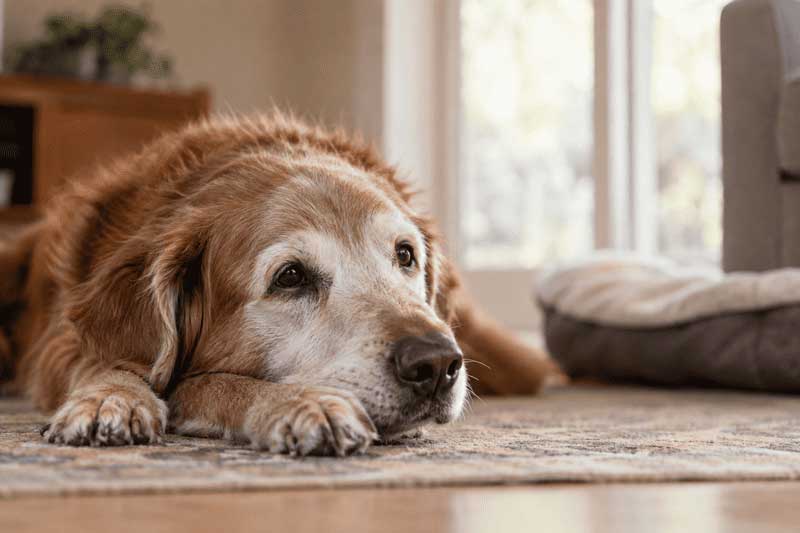
When “They’re Just Getting Old” May Be Something Worth Talking About
Your senior dog walks into a room and seems to forget why they’re there.
They stand on the wrong side of the door waiting to be let out.
They stare at the wall.
They wake you up at 2 a.m. and wander around the house.
Or your perfectly house-trained dog suddenly starts having accidents.
It’s easy to chalk these changes up to one thing:
“They’re just getting old.”
But sometimes there’s more going on.
Dogs can experience age-related changes in the brain known as canine cognitive dysfunction syndrome, or CCD. You may also hear it casually referred to as dog dementia.
At Healthy Pets of Ohio, we want senior pet owners to know that changes in behavior, sleep, house training and interaction aren’t necessarily things you simply have to accept because your dog is getting older.
More importantly, some symptoms that look like cognitive decline can also be caused by other medical problems.
So how can you tell when your senior dog’s behavior deserves a closer look?
What Is Canine Cognitive Dysfunction?
Canine cognitive dysfunction is an age-related condition involving changes in a dog’s brain that can affect things like:
- Memory
- Learning
- Awareness
- Sleep
- House training
- Social interaction
- Behavior
The changes can develop gradually, which makes them surprisingly easy to miss.
You see your dog every day.
A small behavioral change this week may not seem significant. But when those little changes accumulate over several months, you may suddenly realize:
“Wow. He’s really acting differently than he used to.”
That’s why recognizing the early signs can be so valuable.
What Are the Early Signs of Dementia in Dogs?
Veterinarians often look for patterns involving several areas of a senior dog’s behavior.
Here are some of the changes pet owners may notice at home.
1. Your Dog Seems Confused in Familiar Places
One of the more noticeable signs is disorientation.
A dog that has lived in the same house for years may suddenly seem confused about familiar surroundings.
You might notice your dog:
- Walking to the wrong side of a door
- Appearing unable to find their way around furniture
- Wandering into a room and seeming confused
- Getting stuck behind furniture
- Standing in corners
- Having trouble finding their food or water bowl
- Seeming confused about how to get back inside from the yard
An occasional goofy moment doesn’t mean your dog has dementia.
It’s the new, repeated pattern that’s important.
2. Your Senior Dog Stares at Walls or Into Space
This can be unsettling.
Some dogs experiencing cognitive changes may spend more time:
- Staring at walls
- Looking into corners
- Standing motionless
- Appearing to stare into space
- Seeming temporarily disconnected from what’s happening around them
But staring isn’t specific to canine cognitive dysfunction.
Vision changes, hearing loss, pain, neurologic problems and other medical conditions can also change how an older dog interacts with their environment.
That’s why a behavioral change should be evaluated rather than diagnosed at home.
3. Your Old Dog Starts Pacing at Night
This is one of the biggest complaints we hear from owners of senior pets.
Everyone goes to bed.
Except the dog.
Your senior dog may:
- Pace around the house
- Wander from room to room
- Wake repeatedly
- Stand next to your bed
- Bark or whine
- Seem restless
- Sleep much more during the day
- Appear confused about whether it’s daytime or nighttime
Changes in the normal sleep-wake cycle can occur with canine cognitive dysfunction.
But nighttime restlessness can have other causes, too.
An older dog with arthritis may have difficulty getting comfortable. A dog that needs to urinate more frequently may wake because they need to go outside. Anxiety, medications and other medical problems can also affect sleep.
So if your senior dog suddenly becomes your 2 a.m. roommate, don’t automatically assume dementia.
Tell your veterinarian.
4. Your House-Trained Dog Suddenly Starts Having Accidents
A dog that’s been house-trained for ten years suddenly urinates in the living room.
It’s easy to become frustrated.
But your dog may not have “forgotten their manners.”
Cognitive changes can interfere with previously learned behaviors, including house training.
However, accidents can also occur because of:
- Urinary tract problems
- Kidney disease
- Diabetes
- Increased thirst
- Mobility problems
- Gastrointestinal problems
- Certain medications
- Other medical conditions
A sudden house-training problem in a senior dog deserves a medical evaluation before assuming it’s behavioral.
5. Your Dog’s Relationship With You Changes
Cognitive changes can affect social behavior, too.
A dog who once followed you everywhere may begin spending more time alone.
Or the opposite may happen.
An independent dog may suddenly become extremely clingy and constantly seek reassurance.
You might notice:
- Less interest in affection
- Less excitement when family members arrive home
- Increased clinginess
- Anxiety when separated
- Irritability
- Changes in interactions with other pets
- Less interest in playing
These changes can be subtle.
And because personality naturally changes somewhat with age, they may initially go unnoticed.
6. Your Dog Seems to Forget Familiar Routines
Your dog used to run to the kitchen when you said “dinner.”
Now they just look at you.
They may stop responding to familiar cues or seem confused during routines they’ve followed for years.
Owners sometimes notice changes involving:
- Familiar commands
- Meal routines
- Going outside
- Where they normally sleep
- Finding doors
- Recognizing familiar activities
Before assuming memory loss, however, consider another extremely common change in senior dogs:
hearing loss.
A dog that suddenly “forgets” a verbal command may simply not hear it as well anymore.
7. Your Dog Becomes More Anxious
Some senior dogs become noticeably more anxious as they age.
You may see:
- Increased whining
- Restlessness
- Difficulty settling down
- Following family members constantly
- Becoming upset when left alone
- Increased sensitivity to noises
- New fears
- Barking for no obvious reason
Imagine suddenly becoming less certain about where you are or what’s happening around you.
That confusion can understandably lead to anxiety.
A Helpful Way to Remember the Signs: DISHAA
Veterinary professionals sometimes organize signs of canine cognitive dysfunction using the acronym DISHAA:
D — Disorientation
Getting lost, staring, standing in corners or appearing confused.
I — Interaction changes
Becoming withdrawn, unusually clingy or changing interactions with people or pets.
S — Sleep-wake changes
Sleeping during the day and wandering, pacing or vocalizing at night.
H — House-soiling
Having accidents despite previously being house-trained.
A — Activity changes
Less interest in play or normal activities—or repetitive behaviors such as pacing.
A — Anxiety
New fears, restlessness, separation anxiety or difficulty settling.
You don’t need to memorize DISHAA.
The important thing is recognizing when your dog’s normal behavior begins to change.
Is It Dementia—or Something Else?
This may be the most important part of the entire article.
You cannot diagnose canine cognitive dysfunction based on behavior alone.
Several medical problems can create symptoms that look very similar.
For example:
Arthritis or Pain
A painful dog may pace at night, stop playing, avoid stairs or become irritable.
Hearing Loss
A dog that can’t hear well may appear confused or stop responding to familiar commands.
Vision Changes
Declining vision can cause hesitation, disorientation or difficulty navigating the house.
Urinary Problems
A urinary tract problem or increased urine production can cause new accidents.
Kidney Disease or Diabetes
Both can cause increased thirst and urination, potentially leading to nighttime waking or house-soiling.
Neurologic Conditions
Certain neurologic problems can cause behavioral changes, disorientation or unusual movements.
Other Medical Conditions
Hormonal disease, medications and other health problems can also affect a senior dog’s behavior.
That’s why veterinary evaluation matters.
Before concluding “My dog is getting dementia,” we want to make sure something else isn’t responsible.
How Is Canine Cognitive Dysfunction Diagnosed?
There isn’t one simple test that tells us:
Yes, your dog has dementia.
Instead, your veterinarian will consider your dog’s age, medical history, behavior changes and physical examination.
Depending on the symptoms, additional testing may be recommended to help rule out other conditions.
That could include:
- Bloodwork
- Urinalysis
- Blood pressure measurement
- Other diagnostic testing based on your dog’s symptoms
This is another reason routine senior wellness visits become increasingly important as pets age.
Can Dog Dementia Be Treated?
Canine cognitive dysfunction cannot simply be “cured,” but that doesn’t mean nothing can be done.
Depending on the individual dog, your veterinarian may recommend approaches designed to support brain health, manage symptoms and improve quality of life.
These may include:
- Environmental changes
- Consistent daily routines
- Appropriate exercise
- Mental enrichment
- Dietary changes
- Veterinary-recommended supplements
- Prescription medications when appropriate
- Management of pain or other medical conditions
The right approach depends on the dog.
What Can I Do at Home for a Dog With Cognitive Changes?
Consistency can be particularly helpful for senior dogs experiencing confusion.
Try to keep:
- Feeding times consistent
- Walk schedules predictable
- Furniture in familiar locations
- Food and water bowls easy to access
- Sleeping areas comfortable
- Pathways through the house clear
Nightlights can sometimes make navigating the house easier for older dogs experiencing vision or cognitive changes.
Gentle mental stimulation can also be valuable.
Short walks, sniffing activities, simple food puzzles and familiar games can keep senior dogs engaged without overwhelming them.
The goal isn’t to turn your 14-year-old dog into a puppy again.
It’s to help them remain comfortable, engaged and connected to the family.
Start Keeping Notes on Behavioral Changes
One of the most helpful things you can bring to a veterinary appointment isn’t something you buy.
It’s your phone.
If you’ve noticed unusual behavior:
Take a video.
Record your dog pacing, staring, wandering or struggling to navigate something familiar.
Also keep a simple note of:
- When the behavior happens
- How frequently it occurs
- Whether it’s getting worse
- Changes in eating or drinking
- Bathroom accidents
- Sleep changes
- Mobility changes
- New anxiety or vocalization
These details can help your Healthy Pets veterinary team understand what’s happening at home.
When Should I Take My Senior Dog to the Vet?
Schedule an appointment if you notice new or increasing:
- Confusion
- Nighttime pacing
- Sleep changes
- House-soiling
- Anxiety
- Staring
- Wandering
- Changes in interaction
- Difficulty navigating familiar places
- Changes in appetite or thirst
- Mobility problems
- Unusual vocalization
Don’t wait until the changes become severe.
Earlier evaluation gives your veterinary team an opportunity to look for treatable medical causes and discuss ways to support your dog’s quality of life.
Healthy Pets of Ohio: Helping Senior Pets Age Well
Getting older is inevitable.
Feeling lousy doesn’t have to be considered a normal part of it.
At Healthy Pets of Ohio, we believe senior veterinary care is about more than adding years to your pet’s life. It’s about helping make those years as comfortable and enjoyable as possible.
If your longtime companion suddenly seems a little confused, starts wandering at night or simply doesn’t seem quite like themselves, tell us what you’re seeing.
It may be canine cognitive dysfunction.
It may be something completely different.
Either way, “they’re just getting old” doesn’t have to be the end of the conversation.
Frequently Asked Questions About Dog Dementia
What are the first signs of dementia in dogs?
Early signs of canine cognitive dysfunction can include confusion, staring, changes in sleep, nighttime pacing, house-training accidents, increased anxiety, reduced interaction and difficulty navigating familiar environments.
Why is my old dog pacing at night?
Nighttime pacing can occur with canine cognitive dysfunction, but pain, arthritis, anxiety, increased need to urinate and other medical conditions can cause similar behavior. A new pattern of nighttime restlessness should be discussed with your veterinarian.
Why does my senior dog stare at walls?
Staring can occur with cognitive decline, but vision problems, neurologic conditions and other medical issues can also change a dog’s behavior. Frequent or unusual staring should be evaluated by a veterinarian.
Why is my old dog suddenly having accidents in the house?
Cognitive dysfunction is one possibility, but urinary problems, kidney disease, diabetes, medications, mobility issues and other conditions can also cause accidents in previously house-trained dogs.
At what age do dogs get dementia?
Canine cognitive dysfunction is associated with aging, but there isn’t one specific age when every dog becomes at risk. Aging varies considerably based on breed, size, genetics and overall health.
Can canine cognitive dysfunction be treated?
There isn’t a simple cure, but veterinary care may help manage symptoms and support quality of life. Treatment may include environmental changes, enrichment, nutrition, supplements or prescription medication depending on the individual dog.