
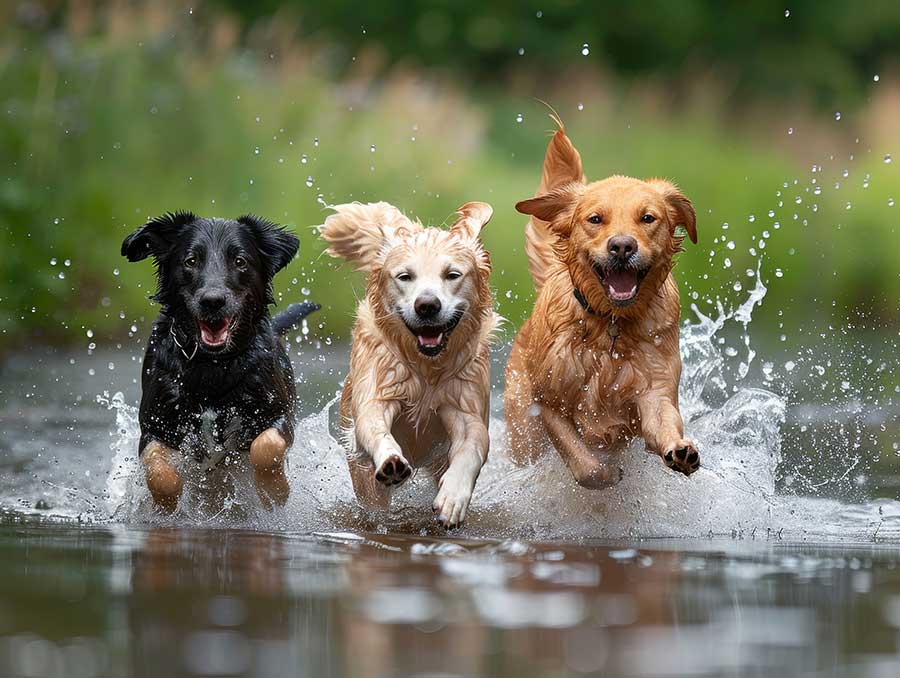
When summer hits Central Ohio, water becomes part of everyday life—backyard pools, lakes, rivers, and weekend getaways. And naturally, many pet owners assume their dog will instinctively know how to swim.
At Healthy Pets of Ohio, we see this misconception all the time.
The truth is: not all dogs are natural swimmers—and even strong swimmers can run into trouble in the wrong conditions.
Before you let your dog jump into the water this summer, here’s what you should know to keep them safe.
Are All Dogs Good Swimmers?
Despite the common belief, swimming ability varies widely depending on your dog’s breed, body type, and experience.
Dogs that typically struggle in water include:
- Short-nosed (brachycephalic) breeds like Bulldogs and Pugs
- Dogs with heavy chests and shorter legs
- Senior dogs with arthritis or reduced mobility
- Puppies who haven’t been introduced to water properly
Even dogs that can swim may panic, tire quickly, or struggle to stay afloat—especially in unfamiliar environments.
Pool vs. Lake: Not All Water Is the Same
Swimming risks can vary depending on where your dog is.
Backyard Pools
- Dogs may not know how to find the steps to get out
- Slippery edges can make exit difficult
- Fatigue can set in quickly without supervision
Tip: Always teach your dog where the exit is—and consider a pet-safe ramp if needed.
Lakes and Ponds (Common in Central Ohio)
- Uneven or muddy entry points
- Sudden drop-offs
- Hidden debris
- Exposure to bacteria or parasites
One of the biggest risks in Ohio lakes during summer is harmful algal blooms (blue-green algae).
These toxins can be extremely dangerous—even deadly—if ingested. Dogs are at higher risk because they often drink the water or lick their fur after swimming.
Signs Your Dog Is Struggling in the Water
Dogs don’t always show obvious signs of distress.
Watch for:
- Head low in the water or tilted upward
- Wide, panicked eyes
- Minimal forward movement despite paddling
- Sudden fatigue or sinking
If you notice any of these, get your dog out of the water immediately.
Life Jackets Aren’t Just for Boats
Even if your dog “knows how to swim,” a properly fitted dog life jacket can make a huge difference.
They’re especially important for:
- First-time swimmers
- Small or short-legged breeds
- Senior dogs
- Boating or deep-water environments
A life jacket adds buoyancy and gives you a handle to quickly lift your dog out if needed.
After-Swim Health Risks to Watch For
Swimming can also lead to several health issues if precautions aren’t taken.
Ear Infections
Moisture trapped in the ears can lead to infections—especially in dogs with floppy ears.
Skin Irritation
Bacteria, algae, and chemicals can cause itching, redness, or hot spots.
Water Ingestion
Drinking too much lake or pool water can cause:
- Vomiting
- Diarrhea
- In rare cases, water intoxication
Safe Swimming Tips for Your Dog
To help your pet enjoy the water safely this summer:
- Always supervise your dog around water
- Start slow—never force them in
- Rinse your dog after swimming (especially after lakes or pools)
- Provide fresh drinking water to prevent them from drinking unsafe water
- Avoid water with visible algae or strong odors
- Limit swim time to prevent exhaustion
Let’s Make Summer Safe and Fun
Swimming can be a great way for dogs to exercise, cool off, and have fun—but only when it’s done safely.
At Healthy Pets of Ohio, we’re here to help you navigate seasonal risks so your pet can enjoy everything summer has to offer.
If your dog swims frequently or you notice any issues like ear irritation, skin problems, or changes in behavior, it may be worth a quick check.
Remember
Not every dog is built for the water—and even strong swimmers need supervision and protection.
With the right precautions, you can turn summer swimming into a safe, healthy, and enjoyable activity for your pet.