
Hidden Dangers in Your Home Every Pet Owner Should Know
Every March, veterinarians across the country recognize Pet Poison Prevention Awareness Month—a reminder that many of the most common pet poisonings happen right inside the home. At Healthy Pets of Ohio, we treat poisoning cases every year that could have been prevented with just a little awareness.
Dogs and cats are naturally curious. They explore with their noses and mouths, and unfortunately that curiosity can sometimes expose them to substances that are perfectly safe for people—but dangerous or even life-threatening for pets.
Below are some of the most common hidden dangers we see affecting pets in Central Ohio.
Chocolate and Caffeine
Chocolate is one of the most well-known toxins for dogs, but many pet owners don’t realize how dangerous it can be.
Chocolate contains theobromine, a stimulant that dogs cannot metabolize efficiently. Dark chocolate and baking chocolate are especially toxic, and even small amounts can cause serious symptoms.
Signs of chocolate poisoning may include:
- Vomiting or diarrhea
- Rapid heart rate
- Tremors or seizures
- Restlessness or hyperactivity
With holidays like Easter approaching, households often have more chocolate around than usual—making this a particularly important time to stay vigilant.
Xylitol (Artificial Sweeteners)
One of the most dangerous and fast-acting toxins for dogs is xylitol, a sugar substitute commonly found in:
- Sugar-free gum
- Sugar-free candy
- Peanut butter
- Toothpaste
- Baked goods
Even a small amount can cause a rapid drop in blood sugar in dogs, leading to weakness, seizures, or liver failure. Many poisoning cases happen when a dog gets into a purse, backpack, or kitchen counter where gum or candy has been left within reach.
Human Medications
Many of the calls veterinarians receive involve pets ingesting medications meant for people.
Common examples include:
- Ibuprofen
- Acetaminophen
- Antidepressants
- ADHD medications
- Sleep aids
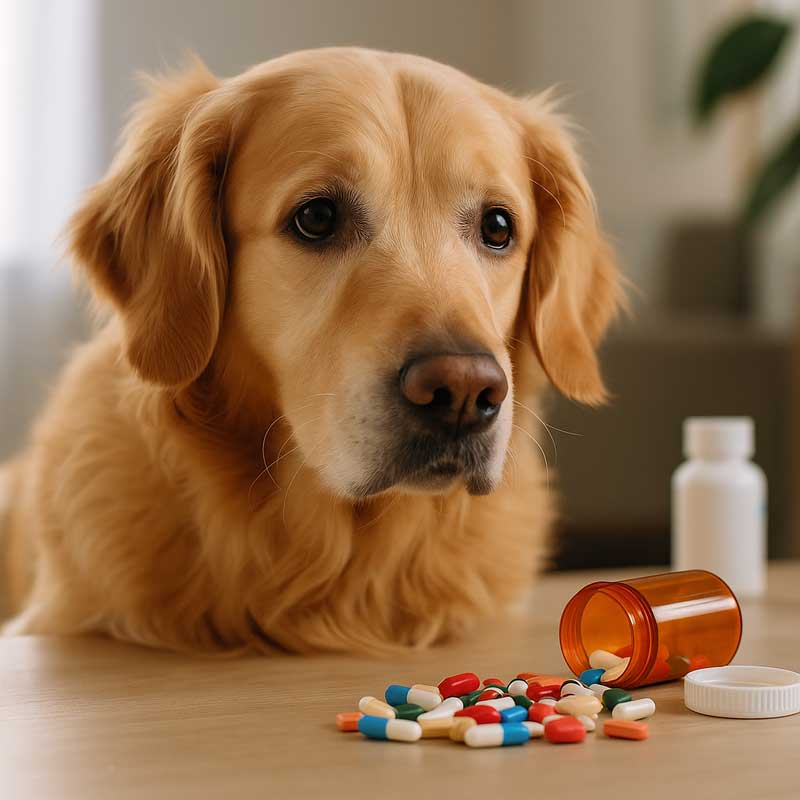
Pets may chew through pill bottles or consume medication that has been accidentally dropped on the floor. Some medications that are safe for humans can be extremely toxic for dogs and cats, even in small doses.
Household Cleaners and Chemicals
Cleaning products, disinfectants, and automotive chemicals are another frequent source of poisoning.
Potential hazards include:
- Bleach and disinfectants
- Drain cleaners
- Antifreeze
- Rodent bait
- Fertilizers and lawn chemicals
Many poisoning incidents occur during spring cleaning or early yard work, when these products are being used more frequently.
Toxic Plants and Flowers
Spring also brings an increase in toxic plants and flowers entering the home.
Some of the most dangerous include:
- Lilies (extremely toxic to cats)
- Tulips
- Daffodils
- Sago palms
- Azaleas
Even chewing on a small part of these plants can cause serious illness.
What To Do If You Suspect Poisoning
If you think your pet may have ingested something toxic, don’t wait for symptoms to appear.
Contact your veterinarian or an emergency veterinary hospital immediately. Early treatment can make a critical difference in outcomes.
Try to have the following information available:
- What your pet may have eaten
- Approximately how much
- When it happened
- Your pet’s weight and breed
Prevention Starts With Awareness
Most poisoning cases are preventable. Keeping medications, foods, chemicals, and plants safely out of reach can dramatically reduce the risk.
At Healthy Pets of Ohio, our goal is always to help pets stay healthy and safe at home. If you ever have concerns about a potential toxin or something your pet may have eaten, our team is here to help.
Because when it comes to poisoning, fast action can save lives.