
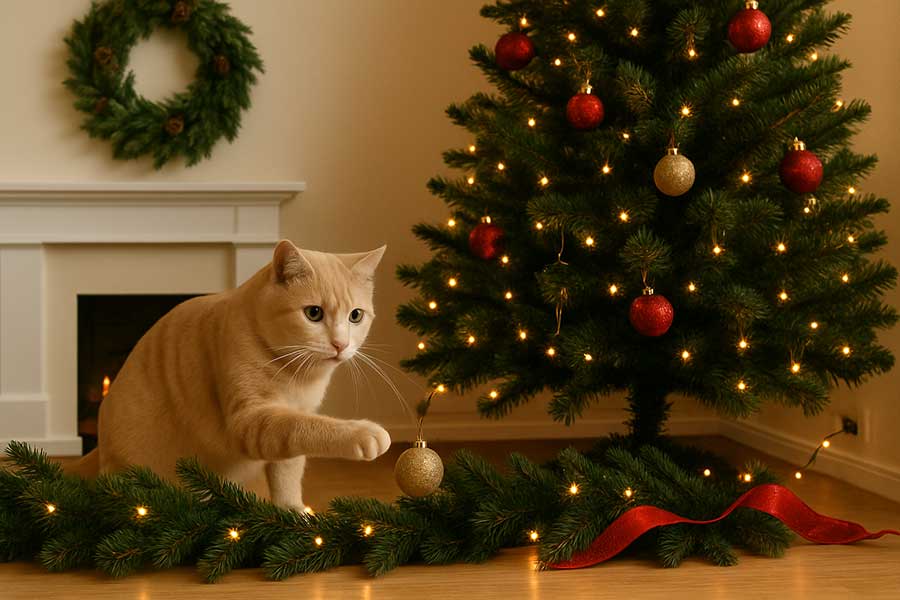
Holiday décor transforms your home into something magical each December — but to your pets, it can look like a playground, snack bar, or climbing gym. Every year, veterinarians see an increase in emergency visits related to holiday decorations, from stomach blockages and electrical burns to toxic plant ingestion.
This guide breaks down the unique risks for different pet types and offers veterinarian-approved ways to keep your home festive and safe.
Cats: The Climbers, Batters, and Chewers
Cats are curious, athletic, and naturally drawn to anything that sparkles, dangles, or moves. Holiday décor hits every instinct they have.
Top Danger Zones for Cats
1. Christmas Trees (Climbing + Chewing Risks)
- Tree climbing leads to tip-overs, broken ornaments, and injuries.
- Chewing on branches (especially artificial ones) can cause mouth irritation or GI upset.
- Cats often try to perch inside the tree — a major fall hazard.
2. Tinsel and Ribbon (High Ingestion Danger)
- Cats love to bat at shiny strands, but ingestion can lead to a life-threatening linear foreign body.
- This is one of the most common December cat emergencies.
3. Garlands and Beads
- Draped items trigger prey-chasing instincts.
- If swallowed, they can cause choking or intestinal blockage.
4. Lights and Electrical Cords
- Chewing cords leads to mouth burns or electrical shock.
- Flashing lights can overstimulate anxious cats.
Cat-Safe Solutions
- Use wide-base tree stands and anchor the tree securely.
- Avoid tinsel altogether.
- Cover cords with protective tubing.
- Place breakable ornaments higher on the tree.
- Use citrus or apple-bitter sprays where needed.
- Provide alternative climbing outlets: trees, shelves, scratch posts.
Dogs: The Investigators and Ingesters
Dogs explore the world with their noses — and their mouths. Most holiday emergencies we treat in dogs involve eating something they shouldn’t.
Top Danger Zones for Dogs
1. Edible-Scented Décor (High Temptation)
- Cinnamon-scented pinecones
- Cranberry wreaths
- Dried oranges
- Salt dough ornaments – Dogs often mistake these for treats.
2. Ornaments (Choking + GI Blockage Risks)
- Plush or soft ornaments can be shredded.
- Glass ornaments can cut the mouth or be swallowed.
- Wood or clay ornaments splinter when chewed.
3. Tree Water (Toxicity Risk)
- Tree preservatives and stagnant water can upset the stomach.
- Mold and bacteria can cause vomiting or diarrhea.
5. Gift Wrap and Ribbons
- Dogs may chew or swallow ribbon, causing intestinal obstruction.
- Plastic wrap and small bows pose choking hazards.
Dog-Safe Solutions
- Block access to tree water using covers or foil.
- Avoid food-scented decor at floor level.
- Place fragile ornaments out of reach.
- Keep gifts with ribbons out of unsupervised areas.
- Monitor curious dogs closely during decorating and gatherings.
3. Small Animals: The Silent but Serious Risks
Rabbits, guinea pigs, ferrets, and other small pets have sensitive respiratory systems and strong chewing instincts. Decorations can be surprisingly hazardous for them.
Top Danger Zones for Small Animals
1. Electrical Cords (Extreme Chewing Risk)
- Rabbits and ferrets can chew through cords silently and quickly.
- Even low-voltage lights can cause burns or shock.
2. Holiday Plants (Toxicity Risk)
- Mistletoe, holly, poinsettias, and certain evergreens can be highly irritating or toxic.
- Small pets are far more sensitive to plant toxins than dogs or cats.
3. Scented Candles, Sprays, and Plug-Ins
- Respiratory irritation is common in rabbits and small mammals.
- Artificial scents and aerosols can trigger sneezing, tearing, and distress.
4. Garland and Fabric Décor
- Many small animals chew textiles or plastic garlands.
- Ingestion can lead to impaction or GI stasis.
Small Pet-Safe Solutions
- Elevate all cords and use chew-proof coverings.
- Keep holiday plants well out of reach or avoid them entirely.
- Choose unscented candles and pet-safe fragrance alternatives.
- Provide safe chew items and enrichment toys during holiday changes.
4. The Christmas Tree: A Pet Magnet for Every Species
The Christmas tree deserves its own section because it’s the most common holiday hazard across all pet types.
Common Risks
- Tip-overs from climbing or jumping
- Ingestion of needles (real or artificial)
- Foreign body ingestion from ornaments
- Electrical hazards from lights
- Bacteria or chemicals in tree water
- Stress from sudden room rearrangement
Veterinarian-Approved Tips for a Safer Tree
- Anchor your tree to a wall or ceiling for extra stability.
- Avoid adding aspirin, sugar, or preservatives to tree water.
- Cover lower branches with non-breakable items.
- Keep fragile ornaments higher and secured.
- Use cord covers or wrap cords in protective tubing.
- Place a baby gate or playpen fence around the tree if needed.
A Room-by-Room Pet-Proofing Strategy
Living Room
- Secure the tree
- Elevate breakables
- Keep cords hidden
- Avoid floor-level scented decor
Dining Room
- Keep edible centerpieces out of reach
- Clean up spills quickly
- Store chocolate and sweets securely
Entryways
- Watch for guests dropping candy or gum
- Keep gifts and shopping bags out of reach
Bedrooms
- Avoid candles with artificial scents
- Keep garlands off headboards and furniture
What to Do If Your Pet Eats Something Holiday-Related
Contact your veterinarian immediately if your pet:
- Vomits
- Seems lethargic
- Has difficulty walking
- Shows signs of abdominal pain
- Is pawing at the mouth
- Has diarrhea
- Is drooling excessively
- Has trouble breathing
Even small ingestions — especially string, tinsel, ribbon, electrical cords, or toxic plants — can escalate quickly.
Healthy Pets of Ohio has multiple locations across Central Ohio equipped to handle holiday-related emergencies and urgent care needs.
Final Thoughts: You Can Have a Festive Home and a Safe Pet
With a little planning, you can enjoy your holiday decorations without putting your pet at risk. Understanding the unique behaviors of cats, dogs, and small animals helps you stay one step ahead — and keeps your home merry, bright, and safe.
If you have questions about holiday safety, plant toxicity, or sudden changes in your pet’s behavior, we’re here to help.
Schedule an appointment or reach out to the Healthy Pets of Ohio team today to keep your pets healthy and safe throughout the holiday season.