
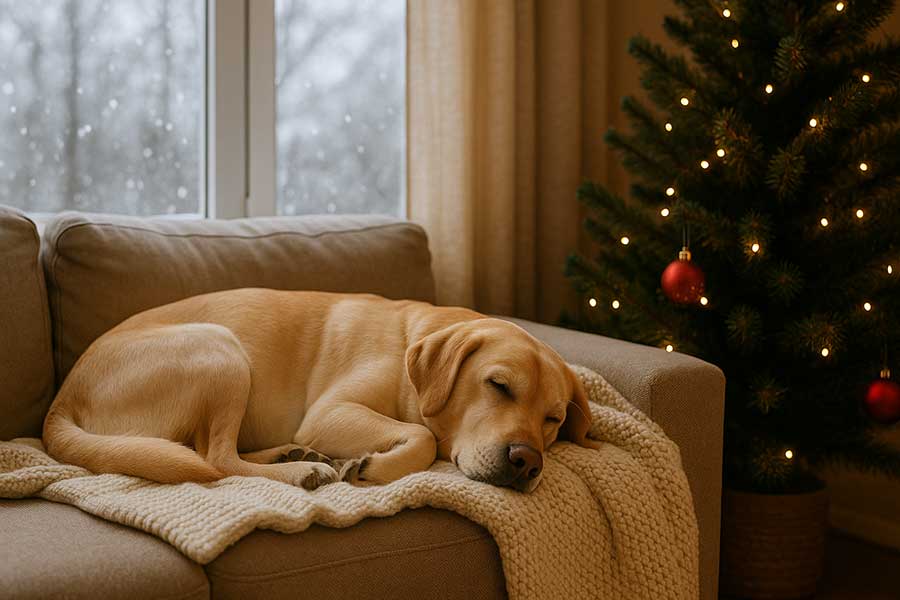
If it feels like your dog or cat has turned into a professional napper this December, you’re not imagining it. Many pets sleep noticeably more during the winter months, especially in December when daylight hours are at their shortest. While it can seem like harmless “winter laziness,” the truth is that seasonal cycles affect pets more than most owners realize.
In this article, we break down the science behind winter sleep changes, how shorter days influence hormones like melatonin, why activity levels naturally decrease, and what you can do to keep your pet healthy, engaged, and mentally stimulated all season long.
- Shorter Days Change Your Pet’s Biological Clock
Just like humans, pets have an internal clock — called the circadian rhythm — that’s heavily influenced by daylight.
During December in Ohio, natural light decreases dramatically. Less daylight triggers:
- A slower morning wake cycle
- Longer overnight sleep
- More daytime napping
- Reduced bursts of high-energy play
Your pet’s body is simply responding to seasonal cues. When the sun rises later and sets earlier, your pet’s natural rhythm shifts with it.
- Melatonin Levels Increase During Winter Darkness
Melatonin is the hormone that signals the brain that it’s time to wind down or sleep. When days grow shorter, melatonin production rises — in both people and pets.
This biological change causes:
- More sleepiness in the early evening
- Slower transitions from rest to activity
- Increased desire to nap throughout the day
- A calmer overall mood
Cats and dogs both experience this hormonal shift, though cats are often more dramatic about it, curling up for long naps wherever warm light is available.
- Cold Temperatures Reduce Outdoor Activity
Winter weather also contributes to decreased activity, especially in pets that are sensitive to cold, snow, or ice.
Common winter behaviors include:
- Shorter walks
- Less interest in outdoor play
- Hesitation around icy or salted sidewalks
- More time spent curled up in warm areas
- Avoiding early-morning or nighttime outdoor trips
Even active dogs may naturally scale back energy output when temperatures drop.
- Winter Can Affect Your Pet’s Mood — Yes, Really
Just as humans may feel changes in mood during the winter months (often linked to Seasonal Affective Disorder), pets can experience seasonal mood shifts too.
Potential winter-related mood changes include:
- Decreased playfulness
- Lower motivation to engage
- Mild irritability or clinginess
- Reduced interest in exploring
- Increased restfulness or “sleepy withdrawal”
Cats often show this through reduced roaming or climbing, while dogs may simply ask to nap more often or snuggle close to their owners.
- Your Heating System Affects Comfort, Sleep, and Daily Rhythm
When furnaces run more frequently in December, pets gravitate toward warm spots — heating vents, blankets, sunny windows, or warm laps. Comfort encourages longer sleep cycles.
Warm, dry indoor air can also cause:
- Dehydration-related sluggishness
- Dry skin
- Increased resting behavior
This is one reason fresh water and humidification become especially important in winter.
- When Increased Sleep Is Normal — and When It Isn’t
Seasonal sleep changes are normal. But certain signs may indicate a health issue that needs veterinary attention.
Contact your veterinarian if your pet shows:
- Sudden or extreme lethargy
- Refusal to eat or drink
- Trouble waking up or staying alert
- Weakness or limping
- Coughing, breathing changes, or weight loss
- Behavioral changes outside normal winter patterns
Underlying issues such as arthritis, thyroid disorders, pain, depression, or age-related disease can mimic “winter tiredness.”
- How to Keep Your Pet Mentally Stimulated During Winter Slowdowns
Even if your pet sleeps more in December, they still need mental and physical enrichment each day. A few simple adjustments can prevent boredom, weight gain, and winter blues.
At-Home Winter Enrichment Ideas:
- Use puzzle feeders or treat balls
- Add short indoor training sessions
- Create scent-work games using hide-and-seek treats
- Teach one new cue or trick per week
- Introduce new textures, toys, or rotation schedules
- Offer window-watching perches for cats
- Try gentle indoor fetch or tug games
- Schedule structured play breaks
Even 10 minutes of mental challenge can make a big difference in your pet’s winter mood and daily energy.
- Don’t Forget About Joint Support in Cold Weather
If your pet seems extra tired, it may be due to joint stiffness rather than sleepiness.
Cold weather can worsen:
- Arthritis
- Hip dysplasia
- Old injuries
- Back pain
- General stiffness in senior pets
If your pet slows down specifically after walks, stairs, or cold-weather play, winter joint discomfort may be at play. Your veterinarian can recommend supplements, treatments, or adjustments to help.
Final Thoughts: Winter Sleep Changes Are Normal — But You Can Help Your Pet Thrive
It’s completely normal for pets to sleep more in December. Between shorter days, increased melatonin, chilly weather, and cozy indoor environments, your pet’s biology simply shifts into a slower winter rhythm.
With a bit of enrichment, protection from cold, and routine veterinary care, your pet can stay healthy, active, and happy throughout the season.
If your pet’s behavior seems unusual or if you’re concerned about changes in energy or mood, our team at Healthy Pets of Ohio is here to help.
Schedule an appointment today, and let’s make sure your pet stays comfortable and thriving all winter long.